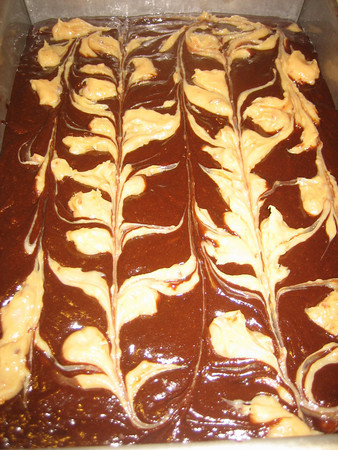
The Bella Bar

You are going to wish I didn’t post this.  Even with the last of them dispersed to hungry college students and absolutely not-a-one left for my own consumption, I regret that I’m posting this.  Because thinking about them just makes me sad that they are all gone.  It makes me want to make more.  Which I won’t.  At least not tonight.

Remember the Flying Hills Elementary School Bars of Excellence?  Well.  I did something very naughty to them.  Very bad indeed.

I’ll give you a clue.  It started with this:

And then this happened:

Which, who are we kidding, was just the gateway to this:

And resulted in this:

And of course, this:

Bad, BAD Nutella!

But why call it the Bella Bar you ask?  You may remember a character from some of the way-back posts who went by the nickname ‘Petting Zoo.‘ She earned a reputation for chewing on gingerbread and coconut flakes.  She was even featured in a certain Alumni Magazine for her misdeeds.  Well, when she isn’t terrorizing baked goods, Petting Zoo goes by the alias ‘Bella.’

In addition to gnawing on inappropriate foodstuffs, Bella does imitations.  Here she is doing Lindsey Lohan.

Bella the Cat is the Kitchen God’s occasionally better behaved sister.  The markings on her fur also look suspiciously like the pattern created when peanut butter and Nutella mate.  The Bella Bar is their love child.

Dulce de Leche III

Yes, we’re back to dulce de leche.  But really, why would anyone ever leave?

Let us review.  I’ve already talked about two dulce de leche making methods.   The first involves boiling the sweetened condensed milk in the original can in a water bath.  I tried this method before reading about the apparent danger of explosion with this method.  A little to my disappointment, mine did not explode…in fact it worked well though took about 3 hours.  In the second method, the milk was baked in a water bath inside a roasting pan.  So really, was it roasted?  This method was also successful and took much less time than the dangerous method.  Thanks David Lebovitz.

I tried one more method this summer: the  double boiler.  While a fine dulce de leche resulted, like the boil-in-a-can method, it too took forever.  FOREVER. AND there wasn’t even the excitement that it might explode at any moment.

The winner in my book:  bake your dulce de leche.  Easiest hands-down.

What did I do with the third batch of dulce de leche you ask?   Dulce de leche sundaes made with homemade vanilla bean ice cream, prailined pepitas and cinnamon-laced whipped cream.

Flying Hills Elementary School Bars of Excellence (PB Bars for short)

Who knows what triggered the memory but suddenly, in the very recent past, all I could think about were these peanut butter bar type creations that were served in my elementary school cafeteria.  Now I realize that “things served in an elementary school cafeteria”  and “things one would want to eat” are not often used in the same sentence.  But these, at least to the third grade me, were even better than the twinkies or ding dongs that were usually considered the pinnacle of eight-year-old haut cuisine.    They were super moist, slightly chewy and had some sort of slightly cruncy icing on them.  Let me take a moment.  Okay…moving on.

At this point I’ve done enough baking to have a “sense” of how to make something.  I mean, I’m no Alton Brown but, I’ve sort of started to “get it.”  So, I skipped the recipe search and went straight to experimentation.  The first batch, while not bad tasting, completely missed the mark on texture.  Texture is an important part of the memory for me.  So, during a particularly long commute the next day, I worked out the following recipe.  And, wouldn’t you know, I hit pay-dirt.

My own relationship with peanut butter is pretty hot and cold.  Sometimes I love the stuff while other times I want nothing to do with it (this usually comes right after making the infamous chocolate peanut butter balls and all I can smell is peanut butter).  I provide fair warning: these are super-duper peanut-buttery.  There is no nuance in this baked good.  No delicate layers of flavor or multiple dimensions for the palate.  I didn’t even cut this with chocolate (though you couldn’t go wrong by doing so).  This bar has one note…peanut butter.

The recipe begins where all good recipes commence: with butter.  Two kinds.  Regular and peanut.  Melt them together over low heat and set aside to cool to room tempurature.

While the butters are cooling, sift the sugars and salt together.  There is a lot of sifting in this recipe.  This is so you don’t have to do a lot of mixing.  In this case, as with my brownie recipe, mixing makes things tough.  And nobody wants a tough time with peanut butter.

Whisk in some eggs and vanilla.  Then the butters.

Finally, we stir things up with some (sifted) flour. 

And then, into a prepared pan and into the oven. 

I realize it comes out looking an awful lot like a blondie.  But these are not blondies!  I can’t exactly tell you why–as I’ve already said, I am not Alton Brown.  But really, these are not blondies.  They are much less cakey and springy and slightly fudge-like in texture. 

Remember how I said the original Flying Hills Elementary School Bars of Excellence had icing.  Well, these do too.  Three ingredients: peanut butter, confectioners sugar and milk.

We’re getting there.

Really, are shots of icing ever gratuitous?

Once the icing sets up, cut as normal and, well, you know what to do next.

Yep, just like the cafeteria used to make.  Let me pull-on my jelly shoes and flip up my Izod collar because 1982 called and it’s got some baked goods for you.

PB Bar

Preheat oven to 350 degrees and butter and line with parchment a 9X13 baking pan.

For Bars

16 TBs unsalted butter

1.5 C peanut butter (I used chunky because that is what we had–use what you prefer)

1.5 C granulated sugar

.5 C golden brown sugar, packed

1.5 tsp kosher salt

1 T vanilla

4 eggs at room tempurature

2 C flour, sifted

Melt together butter and peanut butter.  Set aside to cool to room tempurature.  In large bowl, sift together sugars and salt.  Whisk in one egg at a time until combined.  Add-in vanilla.  Whisk in peanut butter mixture until combined.  Sift in flour and mix until flour just disappears.  Pour into prepared pan and bake until tester comes out with moist crumbs (about 35 minutes).

Icing

1 C confectioner’s sugar

.25 cup peanut butter, melted

Milk (amount depends on desired thickness of icing–start with a couple of tablespoons and go from there).

Once bars have cooled, flip out onto a cooling rack fitted into a cookie sheet (to catch the icing).  Mix icing ingredients togther until of desired consistency.  Drizzle over bars.  Let icing set up and cut.

Dulce de Leche Brownies, Por Favor!

When I travel I like to bring back a recipe or food idea native to the culture. From Venice came risotto. From France: Camembert. From Taiwan: mochi. So, when I was in Chile for work, I was on the look-out. Chile has great food and I had more than my share of beef, salmon (pronounced saLLmon) and wine of the Carmenere variety (somehow a case of it even followed me home).  But alas, I didn’t return particularly inspired to make something new. So, I’m admitting now, this recipe is a bit of a cop-out.

But before I move on, I have a picture viewing hint.  If you place your cursor over a picture you can click on it to enlarge.  When I was proofing this post the pictures looked really small so I thought I’d bring this little tidbit to your attention.

Dulce de leche is popular in many Latin American countries. It’s very rich, very good and almost impossible to mess-up. So, inspired by David Lebovitz’s own version, I bring you my not-particularly-creative but definitely good dulce de leche brownies.

Since I used my own brownie recipe http://www.tmhostess.com/2010/01/the-brownie-stands-alone/, let’s focus on the dulce de leche. Dulce de leche starts and ends with a single ingredient: sweetened condensed milk. Yep, that’s all (though if you are like me, you’ll add in a little kosher or sea salt).

I’ve come across three ways of making it, two of which I’ve tried, one I will detail here and the third will come next week. The first version involves placing an open can of the stuff in a pot filled with water (well, filled up to about an inch from the top of the milk can). Then you boil the water for about two hours, replacing the water as it turns to steam and stirring the milk occasionally. This worked well when I tried it. Apparently, this technique carries the risk of exploding cans of caramel that seems scares people away. The third version I’ve come across involves using a double boiler.

Here is the second version; credits to David Lebovitz.

Get out your roasting pan and a thick pie or baking dish (I like glass). Yes both; we’re going to bake via water bath. Now, add the sweetened condensed milk to the smaller pan (I used a 9X13 pan for my brownies so I used 2 14oz cans of milk).

Before we move on, want to hear a cool story about South America? See the little dish up in the right-hand corner of the last picture? It’s wear I put my rings when I cook.  But that’s not the cool part.  My friend Melissa brought the dish back for me from her sabbatical trip to South America. While she was there she also met a boy, fell in love, got married, had the world’s cutest baby (seriously, the cutest) and now they all live in Buenos Aires Argentina.  That’s the cool part of the story.

Back to the dulce de leche.  Add about 3 inches of water to the roasting pan.

After you have created the water bath, carefully move whole operation into an oven pre-heated to 450 degrees (really, you should put it on a lower rack than I did).

Bake for 35-45 minutes.

Remove from heat, stir et voila—you’ve got dulce de leche. Really, that’s all there is to it.

But here is the thing. Dulce de leche is very, very dangerous stuff to have around. At least if you are me. Which means fairly immediate re-purposing is required. In this case it involved brownies.

Let the dulce de leche cool to room temperature. While it is cooling, pull together your favorite brownie batter. I’ve linked to mine above.

When the dulce de leche is cool to the touch but still spreadable it’s time to get down to business. Pour half of your brownie batter into a prepared pan.   Now, drop 1/3-1/2 of the dulce de leche in teaspoons, evenly spaced throughout the pan.

Drag a knife through the first layer to spread the dulce de leche a bit.

Next, pour the remaining batter over the spread caramel. Repeat the teaspoon and spreading action. Pretty isn’t it?

Now, into the oven. While you are waiting, pay your dues to Balu the kitchen god who watches every project with vigilance from the top of the refrigerator.

The brownies are even pretty when they come out of the oven.

Let the brownies cool completely. In fact, because of the sticky factor of the caramel, you may want to throw the brownies in the fridge over night before cutting.

And here, straight from Santiago Chile to you (and by straight, I mean completely circuitous and probably not even really related), I bring you the dulce de leche brownie.

Dulce de Leche, version II

1 14 ounce can sweetened condensed milk

Sea salt to taste.

Preheat over to 450 degrees.

Pour milk into a smallish baking dish (a pie tin will do as well). Please smaller dish into a larger dish (I used a roasting pan). Fill roasting dish with about 3″ of water. Into the oven it goes. Check at about 30 minutes. Stir and then check at 5 minute intervals until caramel is the color of peanut butter (of course you could cook it more or less to taste). Let cool and store in the refrigerator.

Key (but really, they’re Persian) Lime Bars

Where did May go? Oh yeah, there was some traveling for work. And then there was some vacationing. And now, here we are in June. Okay, moving on.

The dude I am married to loves key lime pie. He also loves the Flight of the Concords. So, in the spirit of the official kick-off weekend of summer, I came up with a lime bar recipe fit to take to the Flight of the Concords’ performance at the Hollywood Bowl last weekend.

This recipe is inspired by a key lime pie recipe from Williams Sonoma. I say inspired because I made so many changes to it that the recipe really is my own. For starters, I didn’t use key limes because I couldn’t find them. So, I guess the following is really a recipe for Persian lime squares with a white chocolate and pistachio streusel.

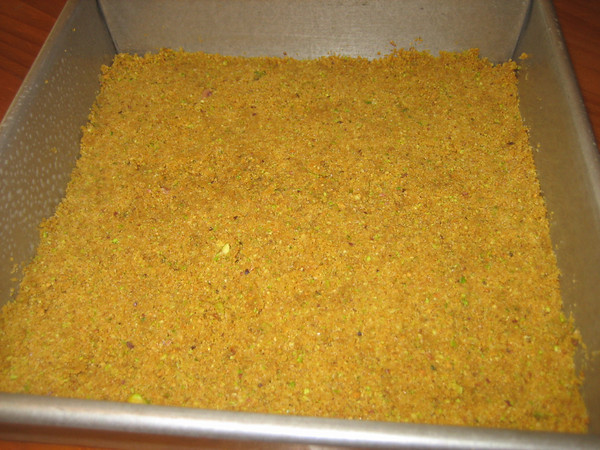
We’ll begin with the crust. Limes are pretty powerful little suckers; much more than lemons if you ask me. The pucker factor always has me attempting to balance out their tartness with other flavors. In this recipe, I started with the traditional graham cracker crust and to it added about a cup of shelled pistachios and a teaspoon of lime zest. Because, well, we all know how I feel about citrus zest.

Pulse it all together in the food processor with some caster sugar until the ingredients resemble course sand.

Add some melted butter, mix and press into a buttered 8” pan lined with parchment paper. I like to use the bottom of a measuring cup to pack down the crust. Now, into the oven it goes.

Meanwhile, it’s time to put together the custard. This recipe is dairy based and calls for sweetened condensed milk. I plan to experiment with a lime-curd (non-dairy) recipe later in the summer. Whisk together egg yolks and lime zest. Add in the lime juice and sweetened condensed milk and whisk, whisk, whisk.

About now the crust should be ready. Add the custard to the crust (unlike my lemon tart recipe, this custard will already be thick and should settle easily into the pan). And back into the oven.

It’s done when the custard no longer jiggles.

Now, you could stop here and let the bars rest in the fridge for two or three hours. But, remember my need to balance-out the tartness of the lime? I have one more flavor to add: white chocolate. Using the grind setting on your food processor, grind together about four ounces of white chocolate with another half cup or so of shelled pistachios (okay, I’ll come clean here, I didn’t do the pistachio part because I was running late, needed to get the bars into the fridge and so didn’t take the time to shell additional pistachios. Just pretend they are there).

Sprinkle the streusel over the still warm bars and THEN into the fridge for at least three hours (really, this is better done over night). Once the bars are chilled, carefully cut into squares.

And then, it’s business time. Signing off—the Hiphopapottmus.

Persian Lime Bars with a White Chocolate-Pistachio Streusel

Crust:

• 1 ½ C crushed graham crackers

• 1 C shelled pistachios

• 3 TBS sugar

• 1 t lime zest

• 5 TBS melted butter

Custard:

• 7 large egg yolks

• 4 TBS lime zest

• 1 C lime juice (Persian, key lime, whatever)

• 2 14 oz cans sweetened condensed milk

Streusel

• 4 oz white chocolate

• ½ C shelled pistachios (more or less to taste)

Preheat oven to 350 degrees. Butter and line with parchment paper an 8” baking pan. In a food processor grind graham crackers. Add in pistachios, sugar and lime zest. Grind until mixture resembles course sand. Remove to a medium bowl and add melted butter. Combine until mixture resembles wet sand and butter is uniformly combined throughout. Press mixture into prepared pan and bake for 5-10 minutes.

In large bowl, whisk together egg yolks and lime zest. Whisk- in condensed milk and lime juice. When crust is browned, carefully add custard mixture and return to the over for 25-30 minutes or until custard sets up.

In food processor, grind together white chocolate and pistachios until both ingredients are to desired size. Once the custard mixture comes out of the oven, sprinkle streusel on top and immediately refrigerate for at least three hours. Cut, and enjoy.

Homer has died and gone to heaven: Doughnut Muffins

Yeah, yeah, I know, you watch “Best Thing I Ever Ate” on the Food Network too. This blog does not claim to be particularly original. Tasty yes. Ground breaking? Eh. So, when I saw the episode about Sprinkles’ founder Candace Nelson’s favorite baked good I knew I had to find the recipe and bring it here. I mean come on—this is what the sister grand pubha of cupcakes puts at the top of her list. It’s gotta be good. And it is, really good. Like, reaaalllly gooood. But there is a secret to the doughnut-muffin that makes them extra super excellent that they don’t share with you on the show that I will share with you here. Promise.

Start with all room temperature ingredients. The butter, milk, buttermilk and eggs—the whole lot—at room temperature (I know you’ve hear this before). What’s more, this is no delicate batter. While you could do it with a hand-mixer, I recommend the big guns (and no TD, I don’t mean your biceps).

Grease the muffin pans but don’t use liners. You’ll see why in a second. The original recipe says to use about ½ cup of batter in each muffin cup. For me, 1/3 cup was perfect (once you see the amount of levening agent in this recipe you’ll understand why).

The batter on its own isn’t particularly interesting or unique. It’s when they come out of the oven that the magic occurs (but just the ordinary magic, not the super special magic part I’m going to tell you about at the end of this post).

While your buns are in the over, melt some butter. A lot of butter. And while you are at it, whisk together a cinnamon sugar party.

Now, as soon as you can handle the muffins without either burning yourself or crushing the muffin, the real fun begins. Start with a nice, all over butter bath. That’s right, bathe these cakes in butter.

Then, before the butter sinks in, give them a sugar scrub all over.

Don’t be shy with the sugar baby.

The doughnut muffin is definitely greater than the sum of its parts. The outside is cinnamon-sugary with a little bit of crunch while the inside is moist and crumbly.

These are delectable as they are but wait. Oh yeah, I’m going there. The only thing better than a plain doughnut muffin.

Is a jelly doughnut muffin. But that isn’t the secret part.

Here is the secret part.

If you have the discipline, let them sit in a tightly sealed container over-night. What they lose in crunch they gain in doughnuttyness. Is there anything better than a doughnut the size of a muffin?

Doughnut Muffins

Kathleen Stewart, Downtown Bakery and Creamery

12 oz. (24 Tbs.) unsalted butter, warmed to room temperature
1-3/4 cups sugar
4 large eggs
1 lb. 11 oz. (6 cups) all-purpose flour
1 Tbs. plus 2 tsp. baking powder
1/2 tsp. baking soda
1-3/4 tsp. salt
1 tsp. ground nutmeg
1-2/3 cups milk
1/4 cup buttermilk

For dipping:
8 oz. (16 Tbs.) unsalted butter; more as needed
2 cups sugar
2 Tbs. ground cinnamon

To make the muffins

Put a rack in the middle of the oven and heat the oven to 350°F. In a stand mixer or a large bowl, cream the butter and sugar. Beat in the eggs, one at a time, until just mixed in. Sift together the flour, baking powder, baking soda, salt, and nutmeg. Combine the milk and buttermilk. With a wooden spoon, mix a quarter of the dry ingredients into the butter mixture. Then mix in a third of the milk mixture. Continue mixing in the remaining dry and wet ingredients alternately, ending with the dry. Mix until well combined and smooth, but don’t overmix. Grease and flour a standard-size muffin tin. Scoop enough batter into each tin so that the top of the batter is even with the rim of the cup, about 1/2 cup (I used 1/3 C) Bake the muffins until firm to the touch, 30 to 35 min.

Melt the butter for the dipping mixture. Combine the sugar and cinnamon. When the muffins are just cool enough to handle, remove them from the tin, dip them into or brush them all over with the melted butter, and then roll them in the cinnamon sugar.

All Hail Kale (chips)

Whaaaaat? Kaaallllleeee? Yes, that cruciferous king of anti-oxidents, kale. In chip form. You know, like potato chips. Or banana chips.

So here is the scoop. Last summer my husband and I spent a week camping up in the Northern California Redwoods. On the way up, we stayed in a little town along the 101 called Ukiah (it’s Haiku backwards…pretty Zen huh?). Ukiah is located in the Southern part of Mendocino County and while the area boasts some fantastic wineries, we were there for the beer. The organic beer at the Ukiah Brewing Company to be specific. http://www.ukiahbrewingco.com/.

The beer was definitely tasty and we did our best to try it all. However, the kale chips were the true scene stealer. When we saw them listed on the specials board we were intrigued. And a little scared. Did I mention how cruciferous kale is? So, we ordered some. Deep green and melt-in-you-mouth crispy, these little gems were salty, nutty and delicious. After all, this wasn’t some sort of raw-food patchouli -scented yoga practicing kale, man—this was kale you eat while drinking beer.

We assumed the chips at the Brewing Company were fried, however, a little research upon returning home from our adventure yielded several recipes for baked kale chips. So I started experimenting and to be honest, I’m pretty sure I’ve discovered Nirvana—at least where dark green vegetables are concerned. Seriously, they are that good.

And super easy. Blink and you’ll miss the recipe.

Start with a bunch of kale (or if you live in my house, two bunches, one for each greedy kale cruncher). There are several types of kale. I’ve tried this recipe with curly green and red kale (the red is surprisingly sweet). I haven’t tried it with Tuscan kale–but assume it would be great.

You want to remove the ribs. I find it easier to flip the leaves face-down and then just cut out the ribs.

Once you have strips of just the tender leaves, tear them into bite-sized pieces, wash thoroughly and allow to dry completely.

After the kale is dry, toss it into a large bowl (it’s hard to tell the scale of the bowl in this picture but, it’s a big one).

Now, for every bunch of kale, mix together a tablespoon of olive oil and a tablespoon of your favorite vinegar. I’ve tried several kinds and my favorite is white balsamic. But, use whatever toots your horn.

I know you know what is coming next. Dump your vinaigrette into the kale and toss the salad (yes, I just said that) until you’ve got every piece coated. Then, salt and pepper to taste.

Now the whole lot goes onto a sheet pan. Spread the leaves into a single layer. I like to line the pan with parchment–because, well, if you haven’t figured it out yet, I line everything with parchment.

Into the oven for 15-20 minutes. Be sure to flip the chips halfway through. And now you’ve got kale chips. Use them to win friends and impress neighbors. Or just eat them yourself.

I have no idea if these will keep stored over night as they’ve never lasted over night in our house.

Kale Chips

  • 1 bunch of kale
  • 1 TBS olive oil
  • 1 TBS vinegar
  • Salt and pepper to taste.

Preheat oven to 350 degrees.

Cut-out ribs and tear kale leaves into bite-sized pieces. Wash and let dry thoroughly. Mix together oil and vinegar and toss into kale coating every piece. Spread into a single layer on a parchment-lined baking sheet. Bake for 15-20 minutes until crispy, flipping chips halfway through baking process.

Zoinks Scoob! Scooby Snacks

Does anyone not love soft pretzels? For me, if nostalgia had a flavor, it would be soft pretzel. Soft pretzels remind me of baseball games and roller rinks and college road trips and summer jobs (the McDonalds up in Lake Arrowhead where I spent three of my  summers during college  sold the things).

Lately it seems, the soft pretzel has appeared in all sorts of incarnations from hotdog and hamburger buns to dinner rolls. My favorite happens to be these little marble-sized pretzel nuggets sold at our local farmer’s market. At nearly six dollars a bag I reasoned I could probably figure out how to make my own. I did. And so was born the scooby snack.

I mean really, it makes sense that scooby snacks are actually soft pretzel nuggets. After all, would you go down a creepy mine shaft, take on a ghostly globe trotter or–ruh-roh–be willing to spend your life cruising along in a psychadellic van with a (very) poor man’s James Franco as your best friend for anything less?

I didn’t think so.

This recipe is actually an adaptation of the one and only pretzel roll recipe from the January 1994 edition of Bon Apetit Magazine. I’ve use it to make all sorts of pretzel-like creations from rolls to actual soft pretzels to the scooby snack.

This recipe starts with the worker bee of baking: yeast.

Combine the dry ingredients in a food processor and pulse, pulse, pulse!

Next slowly add in the hot water and knead until you’ve got dough (it takes my processor three-to-four minutes).  After all that hard work, it’s time for the dough to rest up. Into a greased bowl it goes for about half and hour.

Be sure to cover it in plastic wrap and then a towel in a nice warm place. Nighty night.

Come back 30 minutes later and my, how your dough ball has grown.

Punch this baby down and turn out onto a floured surface. Cut the dough into eight pieces. Working with one piece at a time, form a snake with the dough and cut into six to ten pieces depending on how big or small your like your scooby snacks. Roll each little nugget into a ball. Repeat with remaining dough. Now, even though you are the one who did all the hard work, your dough needs another nap. Twenty  minutes or so. Cover with a towel.

While your nuggets are napping, it’s time to do some magic. You know how soft pretzels have that uber tasty, chewy  skin? This is how they get it. Bring a stock pot of water to boil (see below for specifics).

Once it is boiling you  are going to add baking soda and sugar.

Whaaaat? You feel like you are back at your seventh grade science fair and and you suddenly have an urge to make volcanoes with baking soda and vinegar? Well, this kind of like that. As soon as you add the soda and sugar, you get froth. Yes, the sea is angry my friends. And hungry for some pretzel nuggets.

Now that your pretzel nuggets have napped, it is time to give them a bath. Yes, I too  can hear the natives chanting in the background asking for a dough ball sacrifice. Working in batches, boil the nuggets on each side for about 30 seconds. I use a bamboo kabob skewer to quickly poke and turn the little nuggets.

After their minute is up, remove from the boiling water and set aside on a baking sheet that has been dusted with cornmeal.

Repeat until you’ve boiled all the balls. Then, brush with egg wash and sprinkle on a little coarse salt if you are into that sort of thing. Finally,  into the oven they go for 15 minutes or until they reach your desired level of golden brownness.

And now it’s time to call in Scooby and ask him to do just about anything you want. Because he will. If his reward is a warm, golden, soft and chewy  scooby snack. Alternately, you could take them out to the Mystery Machine where that strange smoky haze coming out through the vents is a sure sign the gang could use some snacks.

Here is the thing. They really don’t save well. So, you and Scooby should probably eat them immediately.

Scooby Snacks

Adapted from the Pretzel Roll recipe

Bon Appetit Magazine, January 1994

Ingredients

  • 2 3/4 cups bread flour
  • 1 envelope quick-rising yeast
  • 1 teaspoon salt
  • 1 teaspoon sugar
  • 1 cup plus 2 tablespoons (about) hot water (125°F to 130°F)
  • Cornmeal
  • 8 cups water
  • 1/4 cup baking soda
  • 2 tablespoons sugar
  • 1 egg white, beaten to blend (glaze)
  • Coarse salt

Process

  • Combine bread flour, 1 envelope yeast, 1 teaspoon salt and 1 teaspoon sugar in a food processor and blend. With machine running, gradually pour hot water through feed tube, adding enough water to form smooth elastic dough. Process 3 minutes to knead. Grease medium bowl. Add dough to bowl, turning to coat. Cover bowl with plastic wrap, then towel; let dough rise in warm draft-free area until doubled in volume, about 35 minutes.
  • Flour baking sheet. Punch dough down and knead on lightly floured surface until smooth. Divide into 8 pieces. Roll out each piece and cut into 6-10 smaller pieces depending on desired size. Form each dough piece into a ball. Place the dough balls on prepared sheet. Cover with towel and let dough balls rise until almost doubled in volume, about 20 minutes.
  • Preheat oven to 375°F. Grease another baking sheet and sprinkle with cornmeal. Bring 8 cups water to boil in large saucepan (I use a stock pot and so double all ingredients in this part of the recipe). Add baking soda and 2 tablespoons sugar (water will foam up). Working in batches, carefully add dough balls and let boil for 30 seconds per side (I use a kabob skewer to quickly turn the balls) Using a slotted spoon or mesh scoop, transfer rolls to prepared sheet. Repeat with remaining rolls.
  • Brush rolls with egg white glaze. Sprinkle rolls with coarse salt. Bake rolls until brown, about 15 minutes. Transfer to racks and cool 10 minutes. Serve scooby snacks warm or room temperature.

Pucker Up for Valentine’s Day

Ah Valentine’s Day.

When I was in the second or maybe third grade I happened to have the chicken pox on Valentine’s Day. In order to sooth her feverish and itchy child, my mother painted a calamine lotion heart over each pock. Knowing my mother’s sense of humor, this gesture was probably one part love to one part ‘hey, wouldn’t it be hilarious if I painted hearts all over my kid.’ A little sweet and a little tart; an apropos description of my feeling about Valentines Day in general.

There are tons of romantic chocolate recipes out there.  So, I thought I’d offer up a little something for those of us who subscribe to a tartier brand of love: the Longfellow Lemon Tart.

A couple of years back, I went through a phase whereupon I was near obsessed with lemon squares and tarts. From this phase came the following recipe named for the street where I lived at the time.

This recipe starts with a removable ring tart pan and, of course, parchment paper. Be sure to butter the pan well.

To make the shortbread crust, just pulse.

Add butter and pulse some more.

Until you get sand. You can actually also use a blender for this as well. I know because when I started making this tart years ago, I didn’t have a food processor. But, I did have a blender.

Then, very carefully and with much patience (just like love), mold the crumbly dough into the pan. Yes, this is a pretty horrible picture but it’s the only one I took. Then, into the oven to bake.

While the sand is transforming into shortbread in the oven, it’s time to make the custard. It starts with the zest of a lemon. Let me tell you, fruit zest is some pretty magical stuff. Perhaps it is what cupid dips his arrows in.

Whisk together eggs, sugar, lemon juice and zest.

Just about the time you are done mixing, the crust should be ready to come out of the oven. Now comes the tough part–filling the crust and getting it into the oven without spilling it.

Here is how I do it. About halfway through the baking process, add a baking sheet to the over to warm. When the crust is brown, remove both and place the tart pan on the sheet (don’t forget it is hot). Then, pour the custard into the tart pan and, with a steady hand, transfer the whole party back into the oven. Bake until it just jiggles.

And the crust is golden brown.

Let it cool. Then, loosen the edges with a butter knife. Take a deep breathe and remove the outside ring.

All this tart needs now is a little powdered sugar.

Luckily for my household, this tart is best eaten the day it is made. At least that’s the excuse we are using for scarfing down most of it immediately.

Ahhh loveeee.

Longfellow Lemon Tart

Shortbread Crust

  • 8 TBS cold unsalted butter cut into cubes
  • 1 1/4 C sifted flour
  • 1/3 C packed golden brown sugar
  • 1/4 TSP kosher salt
  1. Preheat over to 375 degrees
  2. Butter and line with parchment 1 tart pan.
  3. Pulse dry ingredients in food processor to blend. Pulse and add-in cold butter until the mixture resembles sand.
  4. Slowly mold shortbread “dough” into tart pan until bottom and sides are evenly covered.
  5. Bake for 15 minutes until light gold.

Custard

  • 4 large eggs
  • 1 1/2 C. superfine sugar
  • 1/2 C freshly squeezed lemon juice
  • 1/4 C heavy cream
  • pinch of salt
  1. Whisk together filling ingredients.
  2. Fill warm tart
  3. Bake for 20-25 minutes or until filling jiggles.

French Macarons, part I of ???

I had no idea. Really, I didn’t.

What began as a (self-deemed) creative attempt at gift giving has turned into a burgeoning obsession. The French macaron. How I hate thee. And love thee. And hate thee. To make matters worse, the little buggers have begun to show up everywhere. Haunting me. Whereas months ago I’d never even seen one outside of the recipe books, they’re now stalking me from magazine covers, bake shops and Starbucks. That’s right, Starbucks is selling them. Sheesh.

And they aren’t cheap. There is a store in Beverly Hills that only sells French macarons. The price: $1.60 a piece. This has me knocking my head against the wall and (not for the first time) asking myself…why…why did I not think of this 12 months earlier? I’d have the market cornered and  would certainly be well on my way to appearing in the Forbes top gagillionaires under 40 list.

But, I didn’t. And so I probably won’t.

Here is how my relationship with the French macaron began. Over the summer I read David Lebovitz’s The Sweet Life in Paris http://www.davidlebovitz.com/books/. Now, I don’t know where Mr. Lebovitz has been all my life, but man, I’m glad he’s in it now. If you don’t already know (and you probably do), he was a pastry chef at Chez Panisse and now lives in Paris and writes cool cookbooks and a really funny blog http://www.davidlebovitz.com/. The Sweet Life is sort of a living memoir with recipes. And, as soon as I read it, I knew I had to give it as a holiday gift. What better to pair the book with than with a bag of the quintessential French treat (and there is a recipe for them in the book), that’s right, le macaroon Françoise (made by me of course).

Ha!

Are you getting the feeling that my seminal adventures with this sandwich cookie may not have been entirely successful?

Turns out, there is a reason that little shop sells them for nearly two dollars each. Much like the Parisians themselves (yes, I am about to stereotype), they are fussy, finicky and rather unpredictable. But, I’ll admit, also like the city of lights and its culture, the entity (when it does turn out) is worth the hassle.

So, this is my first of who knows how many posts on French macarons. I am determined to get them right. And, I am determined to try each and every flavor (except for the ones I don’t think I’ll like because, really, what would be the point?). Right now, my success rate is about 50%–but I promise to share my successes and failures along the way.

To start, this recipe calls for not only a food processor but also a standing mixer (or some really strong biceps that can create stiff peaks with a whisk). The recipe also necessitates a pastry bags and tips. This is indeed a gadgety recipe.

Next, you make your own flour. Yep, flour from blanched almonds. Using food gadget #1, the food processor (mine’s named Bertha), grind the almonds into a powder. You want the mixture to be super duper fine. I got it as fine as I could. I’ve recently read that you should sift the flour a couple of times after grinding. I’ll try that next time and report back.

To continue with a theme, you then grind together the almond flour, confectioner’s sugar and cocoa.

So as not to make the standing mixer jealous (yes, this too has a name: Marta), egg whites are whipped into lovely silky peaks. A couple of my batter attempts turned out very dry (more on this later). In retrospect, I think I must have over-whipped the egg whites and sugar.

Once you’ve got peaks, very carefully fold in the dry mixture. I’ve read that the resulting batter should act like lava. Indeed, I believe this is an apt description. The batter is definitely liquidy but also has a certain viscosity.

Once you’ve corralled the batter into a pastry bag, pipe disks onto parchment-lined baking sheets. And, into the oven they go. But wait, there seems to be some speculation on whether to let the raw batter harden some before going in to the oven. I think this may make a difference if you live in a humid environment. In dry Southern California the disks were already beginning to harden as I finished each sheet.

Remember my mention of  over-whipping the eggs whites.? Look at the picture below, specifically the, uhm, piles ones on the right. What do they look like? Uhhuh. On the over-whipped batch they piped out in coils and baked in the same form. My husband was incredibly amused and I apologize to anyone who may have been the recipient of a “liberated” french macaron.

Done right, the cookies have “feet” and do not crack or split across the top. Lets talk about the feet first. Take a look at the picture below. See the little base at the bottom? Those are feet. If your cookies crack, they won’t grow feet. And apparently that is a major macaron faux pas.

Through trial and error I discovered that I could only use the top rack in my oven. Lower racks caused the cookies to crack.

After they are nice and cool, you marry up the halves. Fill them (this time around I used a chocolate ganache–though not the one David Lebovitz has with his recipe).

Et voila, you are one step closer to speaking French.

From The Sweet Life in Paris (Broadway) by David Lebovitz

http://www.davidlebovitz.com/archives/2005/10/french_chocolat.html
Batter

  • 1 cup (100 gr) powdered sugar
  • ½ cup powdered almonds (about 2 ounces, 50 gr, sliced almonds, pulverized)
  • 3 tablespoons unsweetened Dutch-process cocoa powder
  • 2 large egg whites, at room temperature
  • 5 tablespoons granulated sugar

Preheat oven to 350º F .
Line two baking sheets with parchment paper and have a pastry bag with a plain tip (about 1/2-inch, 2 cm) ready.
Grind together the powdered sugar with the almond powder and cocoa so there are no lumps; use a blender or food processor since almond meal that you buy isn’t quite fine enough.

In the bowl of a standing electric mixer, beat the egg whites until they begin to rise and hold their shape. While whipping, beat in the granulated sugar until very stiff and firm, about 2 minutes.
Carefully fold the dry ingredients, in two batches, into the beaten egg whites with a flexible rubber spatula. When the mixture is just smooth and there are no streaks of egg white, stop folding and scrape the batter into the pastry bag (standing the bag in a tall glass helps if you’re alone).
Pipe the batter on the parchment-lined baking sheets in 1-inch (3 cm) circles (about 1 tablespoon each of batter), evenly spaced one-inch (3 cm) apart.
Rap the baking sheet a few times firmly on the counter top to flatten the macarons, then bake them for 15-18 minutes. Let cool completely then remove from baking sheet.

Match up pairs and fill with ganache.

Chocolate ganache (recipe by Martha Stewart)

note: I used this recipe not because I don’t like Mr. Lebovitz’s but because I had made this ganache recipe a couple of days before for sundaes and just tripled the batch at the time…you know, kill a couple of birds with diabetes at once.

  • 4 cups heavy cream
  • 2 pounds best-quality semisweet chocolate, finely chopped
  • 1/4 cup light corn syrup
  • 1/4 teaspoon salt

In a small heavy sauce pan, bring cream to boil over medium heat. Remove from heat and add chocolate, swirling the pan so the chocolate is completely covered. Wait a couple of minutes and carefully mix the chocolate and cream together with a spatula. Mix in corn syrup and salt. Transfer to a clean bowl and refrigerate until the consistency of fudge (this makes filling the cookies easier).